


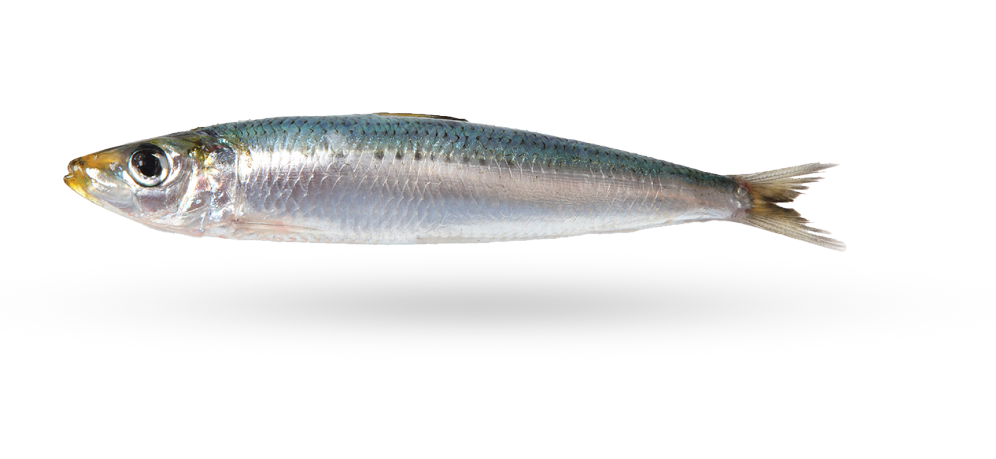
Sardine is a small, oily saltwater fish belonging to the Clupeidae family and typically lives in large schools. Known for its silver-colored appearance, distinctive flavor, and high nutritional value, sardine can be consumed fresh, grilled, pan-fried, baked, or canned.
Physical Characteristics and Habitat
- Its body is slender, elongated, slightly compressed from the sides, and covered with small scales.
- Its back is bluish or greenish, while its sides and belly are bright silver.
- It generally grows to a length of between 15 and 25 centimeters.
- It lives in large schools and usually moves in waters close to the sea surface.
- It feeds on plankton, small crustaceans, fish eggs, and various microorganisms.
- It is found in the Mediterranean Sea, the Aegean Sea, the Sea of Marmara, the Black Sea, and along the eastern coasts of the Atlantic Ocean.
- It migrates seasonally between coastal areas and the open sea for feeding and reproduction.
- In Türkiye, it is caught extensively, especially during late summer and autumn.
Sardine Calorie Content
100 grams of raw sardine contains approximately 185 kcal. A 150-gram serving provides approximately 278 kcal of energy. Sardine is a nutrient-rich seafood containing high levels of protein, omega-3 fatty acids, calcium, iron, and various vitamins.
| Nutritional Value | Per 100 Grams | 1 Serving (150 g) | Daily Value per 100 Grams* |
|---|---|---|---|
| Calories | 185 kcal | 278 kcal | 9.3% |
| Carbohydrates | 0 g | 0 g | 0% |
| Fiber | 0 g | 0 g | 0% |
| Protein | 20.9 g | 31.4 g | 41.8% |
| Fat | 10.5 g | 15.8 g | 16.2% |
| Cholesterol | 61 mg | 91.5 mg | 20.3% |
| Vitamin A | 32 IU | 48 IU | 0.6% |
| Vitamin C | 0 mg | 0 mg | 0% |
| Potassium | 397 mg | 595.5 mg | 11.3% |
| Calcium | 240 mg | 360 mg | 24% |
| Iron | 2.9 mg | 4.4 mg | 16.1% |
*Daily values are calculated based on an average 2,000-calorie diet. Nutritional values are approximate and may vary depending on the species of sardine, season, fat content, serving size, storage conditions, and cooking method.